Learn How to Flourish Letters, Words and Paragraphs
- Flourishing
- 0 comments
Where can I flourish in a word or sentence?
When I was a calligraphy beginner, I often flourished the wrong spots because I didn’t know any better.
I’ve since learnt where to flourish and take up space – the right way. Now I can flourish words and paragraphs on the fly without much drafting.
In this blogpost, I’ll show you exactly where you can flourish. I’ll start from the easiest with lowercase letters, then build up to words and paragraphs.
But first, make sure you read this blogpost on the four rules of flourishing!
How to Flourish Each Lowercase Letter
Let’s start with lowercase letters, which form the majority of words and sentences.
There are five spots you can flourish in lowercase letters:
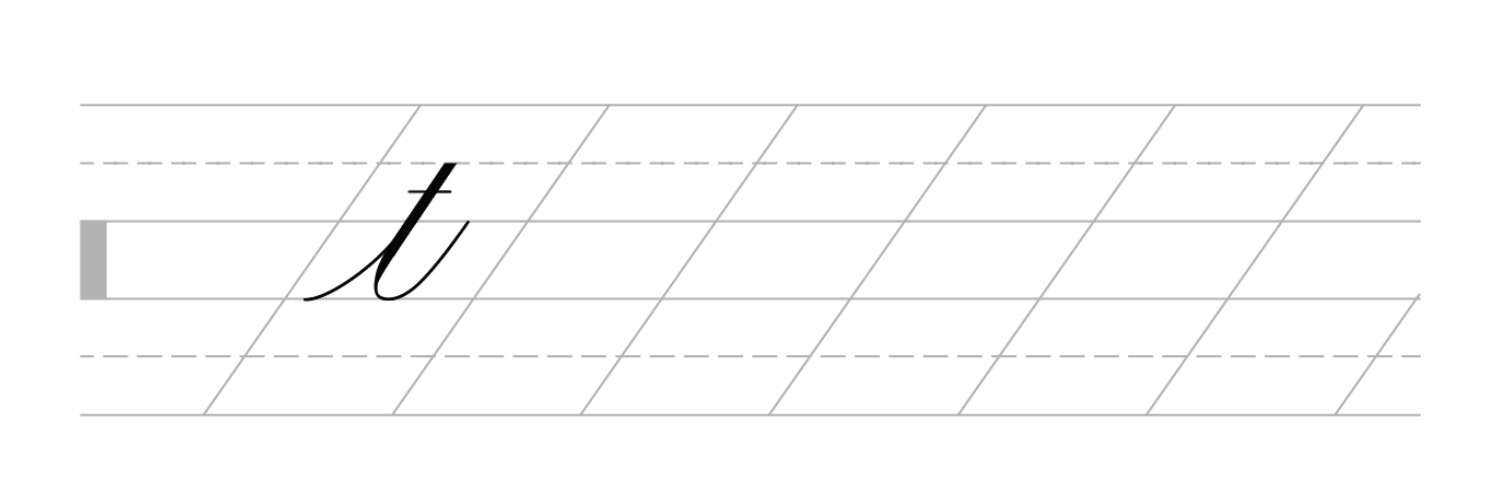
Crossbar of the letter t
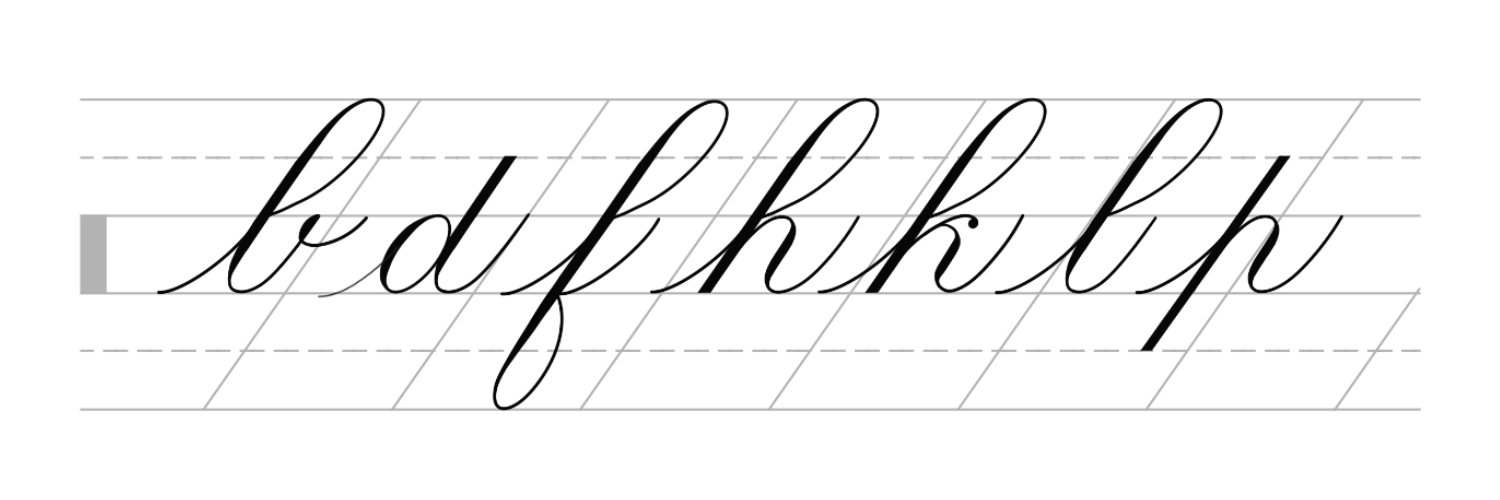
Ascender loop
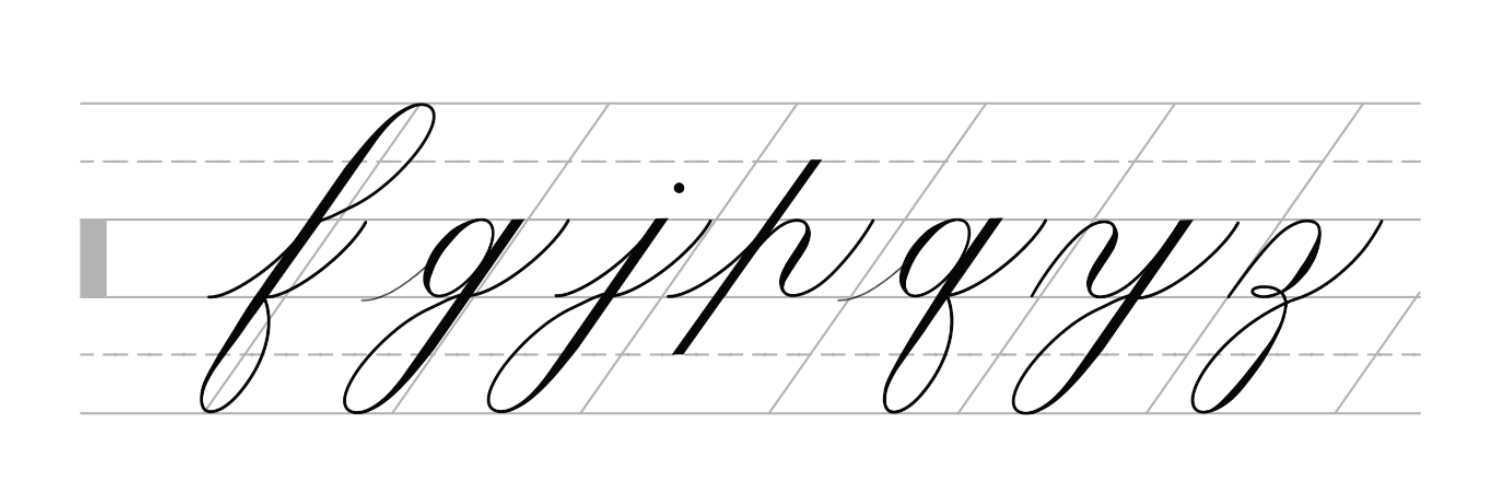
Descender loop
Exit
Entrance
If you practise a standard script like Copperplate, you may be familiar with these strokes and know which letters have ascender loops, for example.
Here’s a quick summary of the spots that can be flourished, and the respective letters.
Crossbar: Letter t
Ascender loop: Letters b d f h k l p
Descender loop: Letters f g j p q y z
Exit & entrance stroke: All lowercase letters
To help you visualise better, let’s also look at some flourishing variations of each spot. (Traceable worksheets of these variations are included in my free Basics of Flourishing guide!)
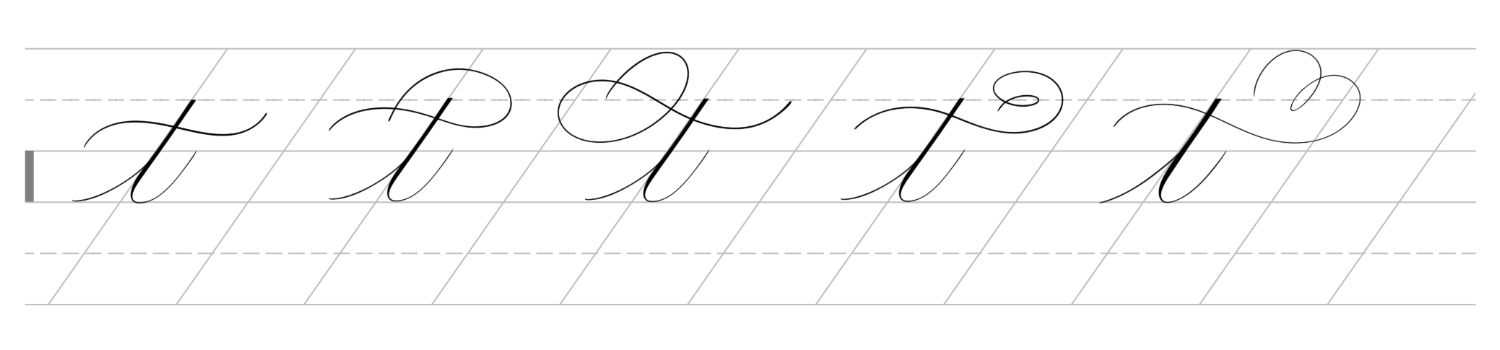
Crossbar flourishing variations
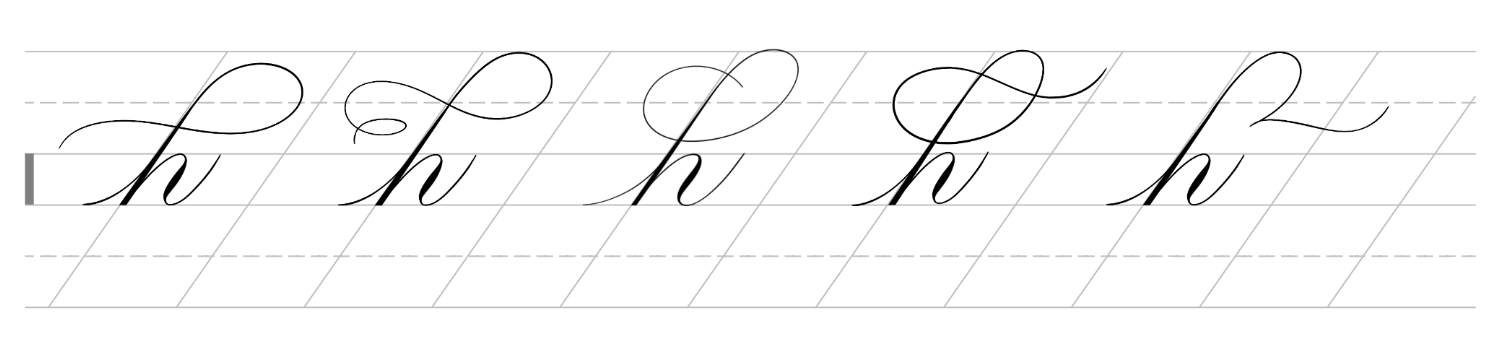
Ascender loop flourishing variations
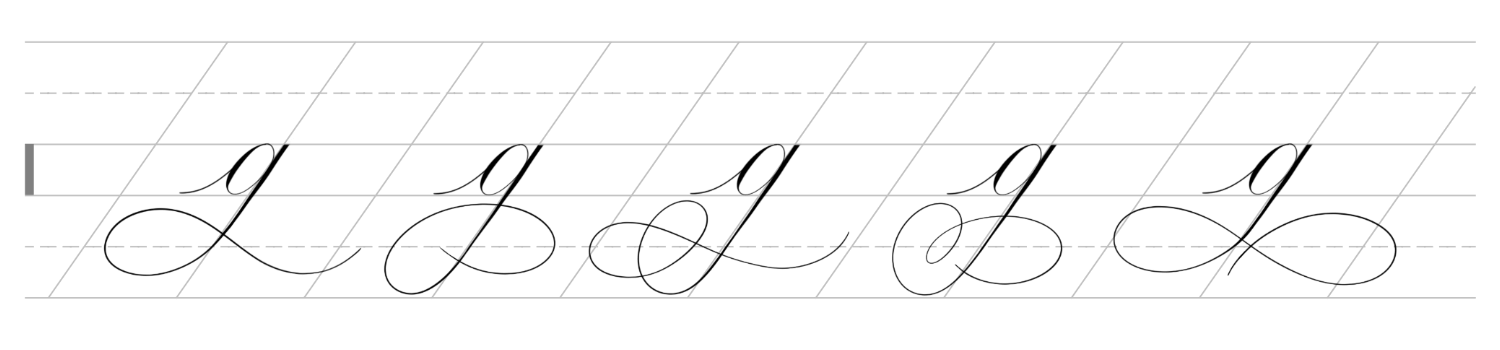
Descender loop flourishing variations
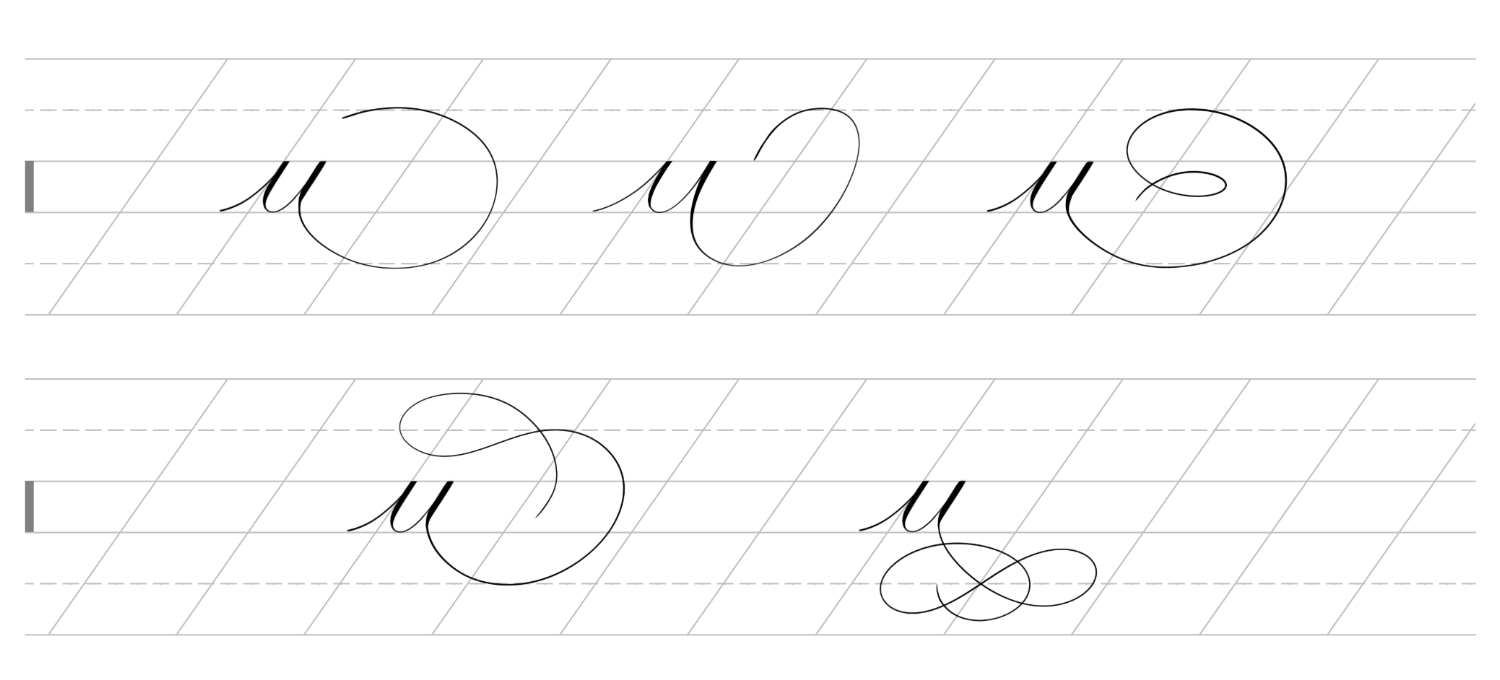
Exit flourishing variations
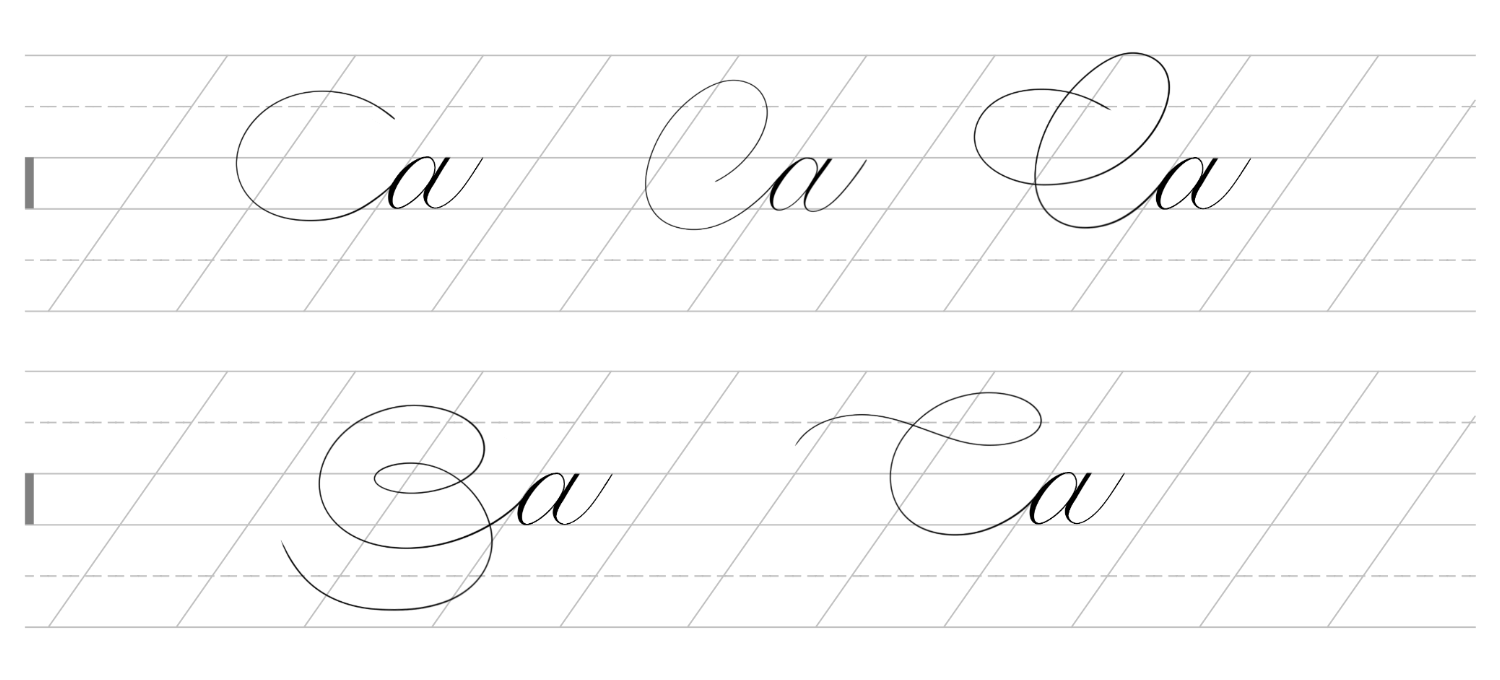
Entrance flourishing variations
Now to take things up a notch and flourish words!
Flourishing a Word
The key to flourishing a word is balance.
Balance size of flourishes, balance weight of flourishes, balance white space.
The simplest way is to think about flourishing opposite spaces:
Flourishing the space above and below a word; or
Flourishing the space on the left and right side of a word.
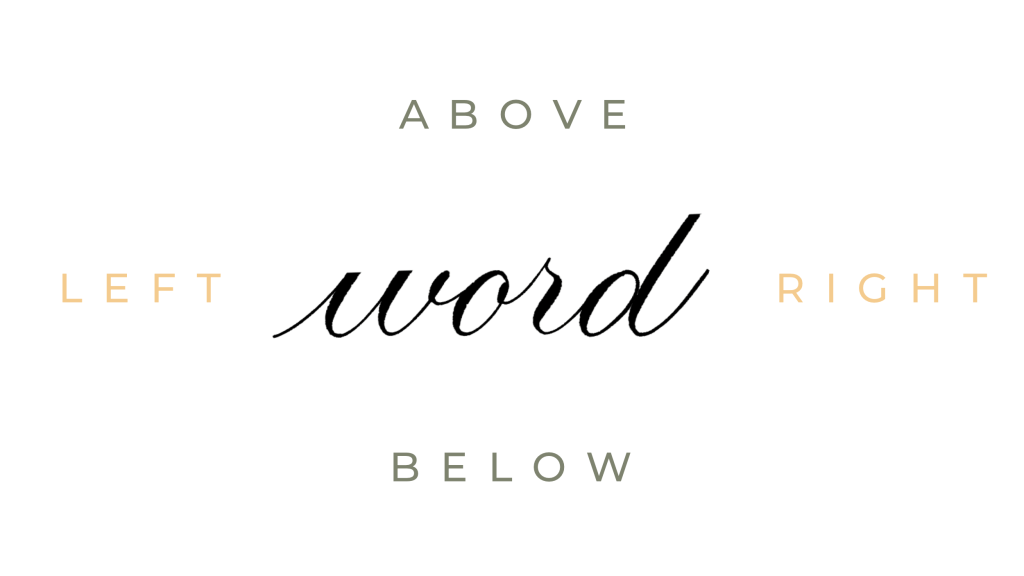
Of course, you can flourish all four spaces if you want to! But it’s not always necessary, and can be more challenging for a beginner.
Let’s look at how to flourish these spaces, with some examples.
To fill the space above and below a word, flourish:
Crossbar
Ascender loop
Descender loop

To fill the space on the left and right of a word, flourish:
Entrance stroke
Exit stroke

It’ll be less confusing if you keep in mind that the key is to flourish opposite spaces. If you apply the concept of using flourish families to flourish opposite spaces, it becomes even easier!
If you’re up for a challenge, try using exit flourishes to flourish the space below a word, or using ascenders to flourish the space on the right side of a word.
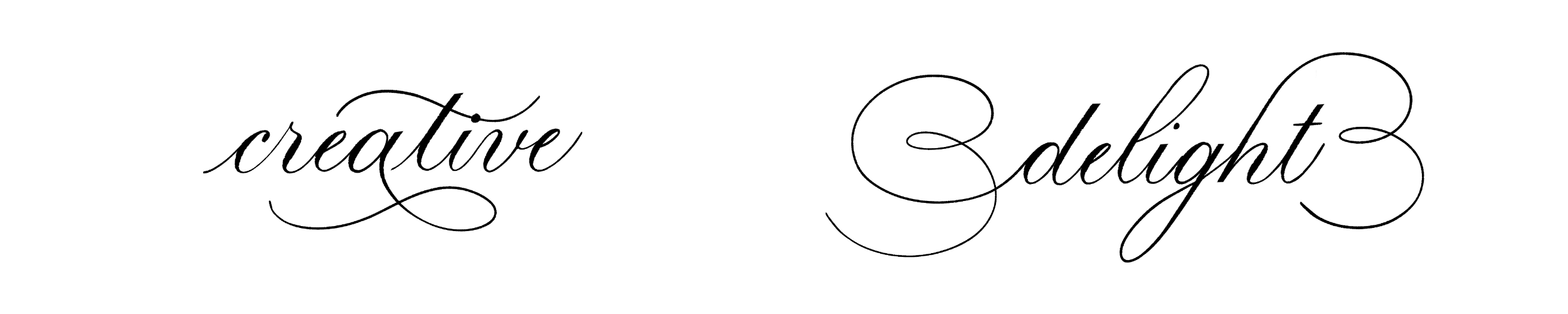
After learning how to flourish a word, let’s take it a step further and flourish a paragraph.
Flourishing a Paragraph
If a long paragraph feels intimidating, break it down into lines of text to make it easier.
Remember the four spaces around a word that you can flourish? Just think of each line of text as a very long word. This means flourishing:
Start of each line of text. To do so, flourish the left side of the first word by using an entrance flourish.
End of each line of text. To do so, flourish the right side of the last word by using an exit flourish.
Interlinear space, or the space between each line. To do so, flourish the space above and below words using crossbar (of the letter t), ascender and descender loop flourishes. A more challenging option is to use exit flourishes to flourish the space below a word.
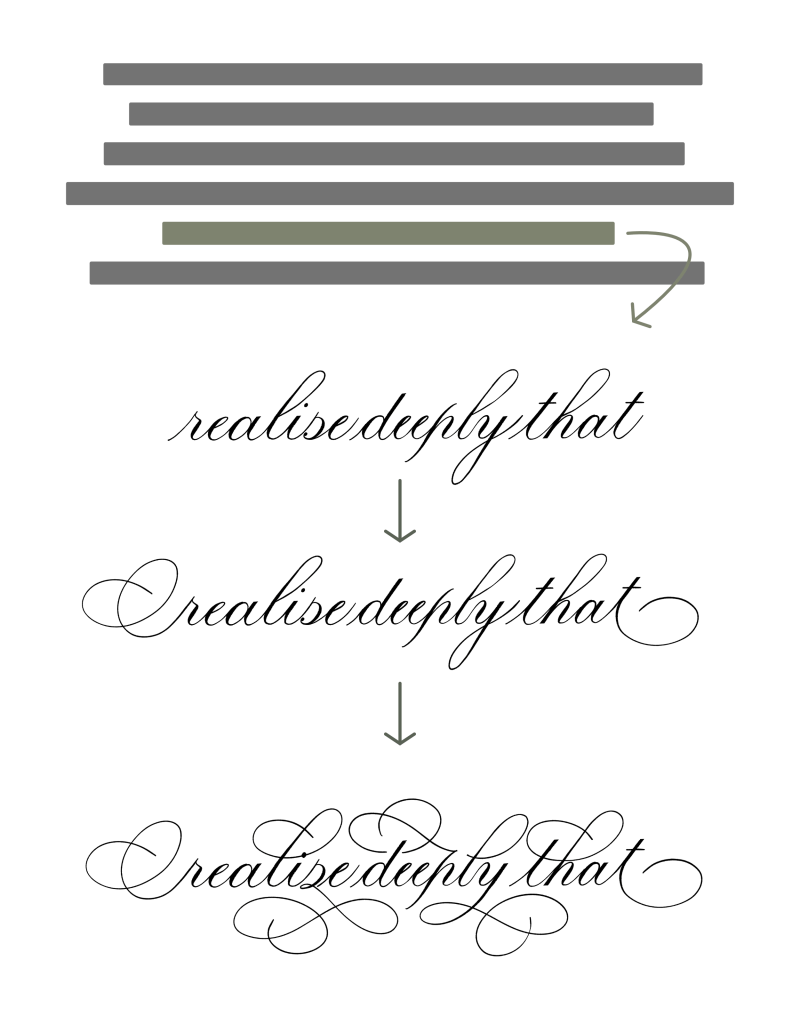
By now, you should have a better understanding of how to use flourishes to fill up the space around a word and in a paragraph!
If it feels overwhelming, don’t worry – flourishing is a skill that can be practised.
Take it one step at a time. Start with short words, then work your way up to longer words and finally, paragraphs.
Most importantly, have fun practising and learning!
→ hey there
I’m Dawn from Singapore.
After leaving a corporate job in the throes of the pandemic, calligraphy has given me more than a hobby and a creative outlet.
Calligraphy challenges me to keep learning, helps me to calm down and focus, and has connected me to so many calligrafriends around the world.
Drop me an email at any time if you have questions / problems while learning calligraphy, or just want to chat about calligraphy! ♥️